
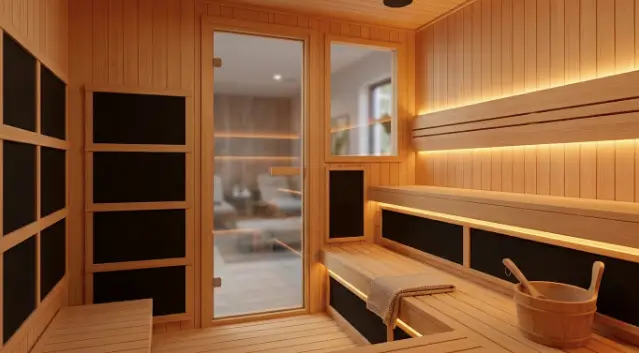
An infrared sauna needs a flat, stable, well-drained surface rated for its weight, and beginners have three realistic outdoor options: a poured concrete pad, a compacted gravel or paver bed, or an existing deck confirmed to handle the load. Concrete costs the most and lasts the longest. Gravel is the cheapest route to a level, drained base. A deck can work well if it is structurally sound, but it is the option most likely to need a professional check first. Indoor placement sidesteps the comparison almost entirely, since most finished floors handle a cabin’s weight and modest heat without extra prep.
Concrete vs. Gravel: Which Wins on Upfront Cost?
A poured concrete pad sized for a two- to three-person cabin typically runs $600 to $1,500 for materials and a few hours of labor if a beginner pours it themselves, or $1,500 to $3,000 hiring it out. A compacted gravel base with a paver or timber edge for the same footprint usually lands at $150 to $400 in materials and a weekend of digging and leveling. Gravel wins clearly on cost and is well within reach for a beginner with basic tools. Concrete wins on longevity and on staying perfectly level year after year, since gravel can settle unevenly if it was not compacted properly at the start.
Concrete vs. Gravel: Which Wins on Drainage and Upkeep?
Both handle water reasonably well when built correctly. A gravel bed drains almost immediately by design, provided it sits on a base layer that does not trap water underneath. Concrete needs a slight pitch built into the pour, roughly a quarter inch of fall per foot, so rain sheds away from the cabin rather than pooling against the base. Skipping that pitch is the most common mistake with a DIY concrete pour, and it is harder to fix after the fact than a gravel bed that settles unevenly, which can usually be re-leveled with a rake and a bag of paver base.
Deck vs. Ground-Level Pad: The Weight Question
A residential deck built to current code generally supports 40 to 50 pounds per square foot, which covers a one- to three-person infrared cabin, its occupants, and normal foot traffic without trouble. The concern is not the deck’s rated capacity so much as its actual condition: joist spacing, any sagging or rot near the planned spot, and how the deck was fastened to the house. An older deck, or one already showing bounce underfoot, is worth a quick look from a contractor before a four- or five-person cabin goes on it, since that size pushes closer to the load limits that matter.
Deck vs. Ground-Level Pad: Which Is Actually Easier to Set Up?
A deck that passes the weight check is the fastest option of the three, since the surface already exists and only needs a level check and clearance from the railing or house siding. A ground-level pad, gravel or concrete, requires digging, leveling, and in some cases a permit depending on the jurisdiction and the pad’s size. For a beginner who already has a solid deck in the right spot, that head start is worth factoring into the decision even if concrete would technically outlast the deck’s remaining lifespan.
Indoor Placement: Skipping the Base Question Almost Entirely
Moving the comparison indoors changes the calculus. Infrared cabins run cooler than traditional saunas and produce little to no standing water, so a finished basement floor, tile, or sealed hardwood generally handles one without special prep. The two things that still matter indoors are a level floor, since even a small lean can stress the cabin’s frame over time, and clearance on all sides for airflow and servicing. Buyers comparing indoor and outdoor placement, including cabins sold through SweatDecks, will find the base requirement is one of the smaller cost differences between the two locations once electrical work is factored in.
The Beginner’s Bottom-Line Comparison
For a first cabin, gravel is the easiest and cheapest way to get a level, drained outdoor base, concrete is the upgrade worth choosing if the sauna is staying put for a decade or more, and a deck is a shortcut worth taking only after a real weight check rather than an assumption. Indoors, the base question mostly disappears, leaving electrical work and clearance as the bigger planning items. None of the three outdoor options is wrong, but picking based on how long the cabin is expected to stay in that exact spot is a better filter than picking based on price alone.
What the Evidence Says About Getting Use Out of a Sauna, Whatever It Sits On
None of this base comparison matters much if the cabin does not get used regularly. A review of sauna bathing research in Mayo Clinic Proceedings, along with an earlier review in The American Journal of Medicine, both point to consistent, frequent use as the pattern associated with the outcomes most studied in Finnish cohorts, an association rather than proof of a guaranteed personal outcome. A cabin placed somewhere inconvenient, wobbly, or hard to reach in bad weather tends to get used less over time, which is a practical reason to weigh convenience alongside upfront cost when choosing a base.
Permits and Local Rules Worth Checking First
Before pouring concrete or ordering a load of gravel, it is worth a quick call to the local building department, since some jurisdictions treat a permanent outdoor pad above a certain size, often around 200 to 300 square feet, as requiring a permit even though a small sauna base rarely comes close to that threshold on its own. Homeowners associations are a separate concern and often have their own rules about visible outbuildings, fencing, or ground cover changes that have nothing to do with the size of the structure itself. A five-minute check before starting saves the possibility of redoing work that did not clear a rule nobody thought to look up first.
Setback requirements from property lines and from the house itself are another detail that catches beginners off guard, particularly for anyone placing a cabin near a fence or a shared boundary with a neighbor. These rules vary widely by municipality, so a base that would be fine on one side of town can violate a setback rule a few streets over. Confirming this alongside the electrical permit, if a 240-volt line is also going in, means one inspection process covers both instead of two separate headaches.
How Base Choice Affects Long-Term Resale and Flexibility
A poured concrete pad is the least flexible of the three options once it is in the ground, since removing or relocating it later means breaking up concrete, which is neither cheap nor quick. Gravel and paver bases can be pulled up and reused elsewhere in the yard if the sauna ever moves, which appeals to anyone who expects to rearrange their outdoor space within a few years. A deck placement carries no extra removal cost at all if the sauna is sold or replaced, since the deck itself stays put regardless of what sits on it. Buyers planning to stay in a home long-term tend to lean toward concrete for its durability, while anyone expecting change sooner often finds gravel the more practical choice.
Frequently Asked Questions
Does an infrared sauna need a concrete pad? No. A concrete pad is the most durable option but a level base of compacted gravel, pavers, or an existing deck rated for the weight works fine for most cabins.
Can an infrared sauna sit directly on grass or dirt? Not for long. Bare ground shifts with moisture and freeze-thaw cycles, which can throw the cabin door out of alignment within a season.
Is a wood deck strong enough for an infrared cabin? Most residential decks built to code can handle a one- to three-person cabin plus occupants, but it is worth confirming joist spacing and condition before placing a heavier model.
Do indoor infrared saunas need a special floor? Indoor placement mostly needs a level, moisture-tolerant floor and clearance for airflow. There is minimal standing water to manage compared with a traditional sauna.
References
- Cardiovascular and Other Health Benefits of Sauna Bathing: A Review of the Evidence, Mayo Clinic Proceedings, 2018
- Benefits and risks of sauna bathing, The American Journal of Medicine, 2001
- Does the Combination of Finnish Sauna Bathing and Other Lifestyle Factors Confer Additional Health Benefits? A Review of the Evidence, Mayo Clinic Proceedings, 2023
By Melissa Grant

